When Answer Quality Becomes Operating Exposure
In a read-only RAG deployment, the failure domain is informational: the user receives incorrect or incomplete guidance. Costly, embarrassing, sometimes regulatory — but usually contained if humans still decide.
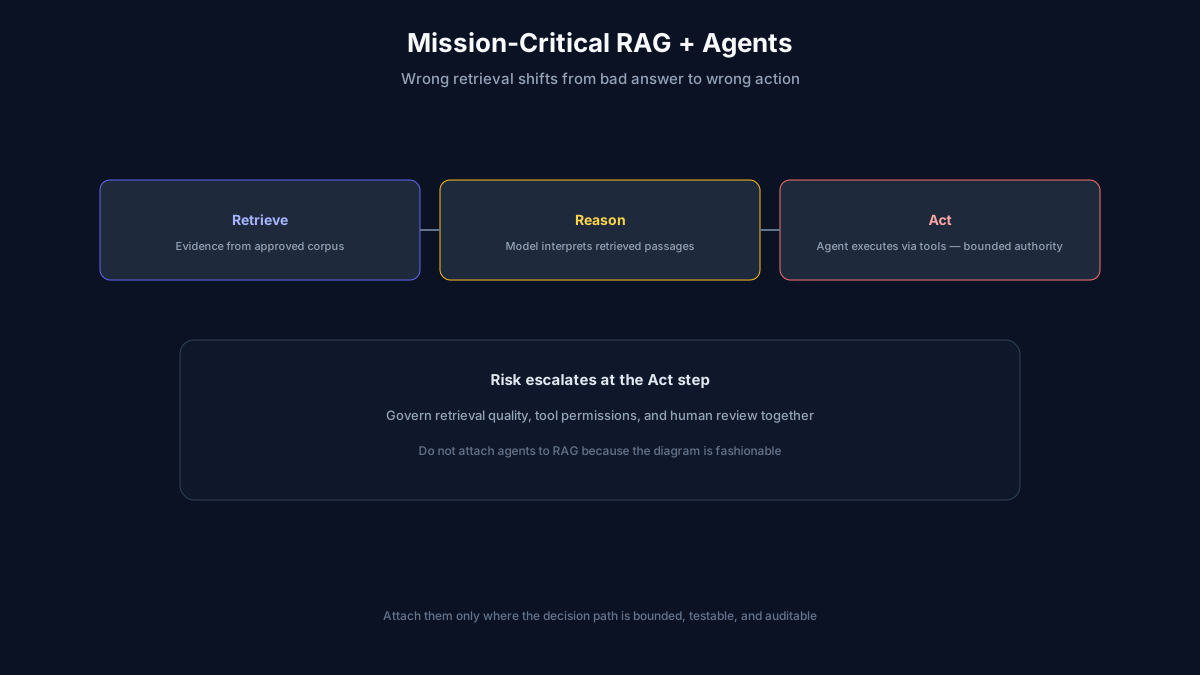
Add an agent that files, pays, binds, or notifies — and the same retrieval miss becomes an operating event. The architecture stack is no longer "model + index." It is retrieve → reason → act, with external side effects.
That step change is what "mission-critical" means here. Not every RAG deployment needs an agent. Every agent touching consequential systems needs RAG discipline if answers drive actions.
Required Controls — One Integrated Design
Authoritative knowledge sources. The agent should retrieve from the same governed corpus you would trust for human operators — versioned, owned, access-controlled. Ad hoc uploads and shadow repositories are not mission-critical sources.
Retrieval quality testing. Before agents act, measure whether retrieval returns the correct policy passage on representative scenarios — including edge cases and known ambiguities. Regression-test when the corpus changes.
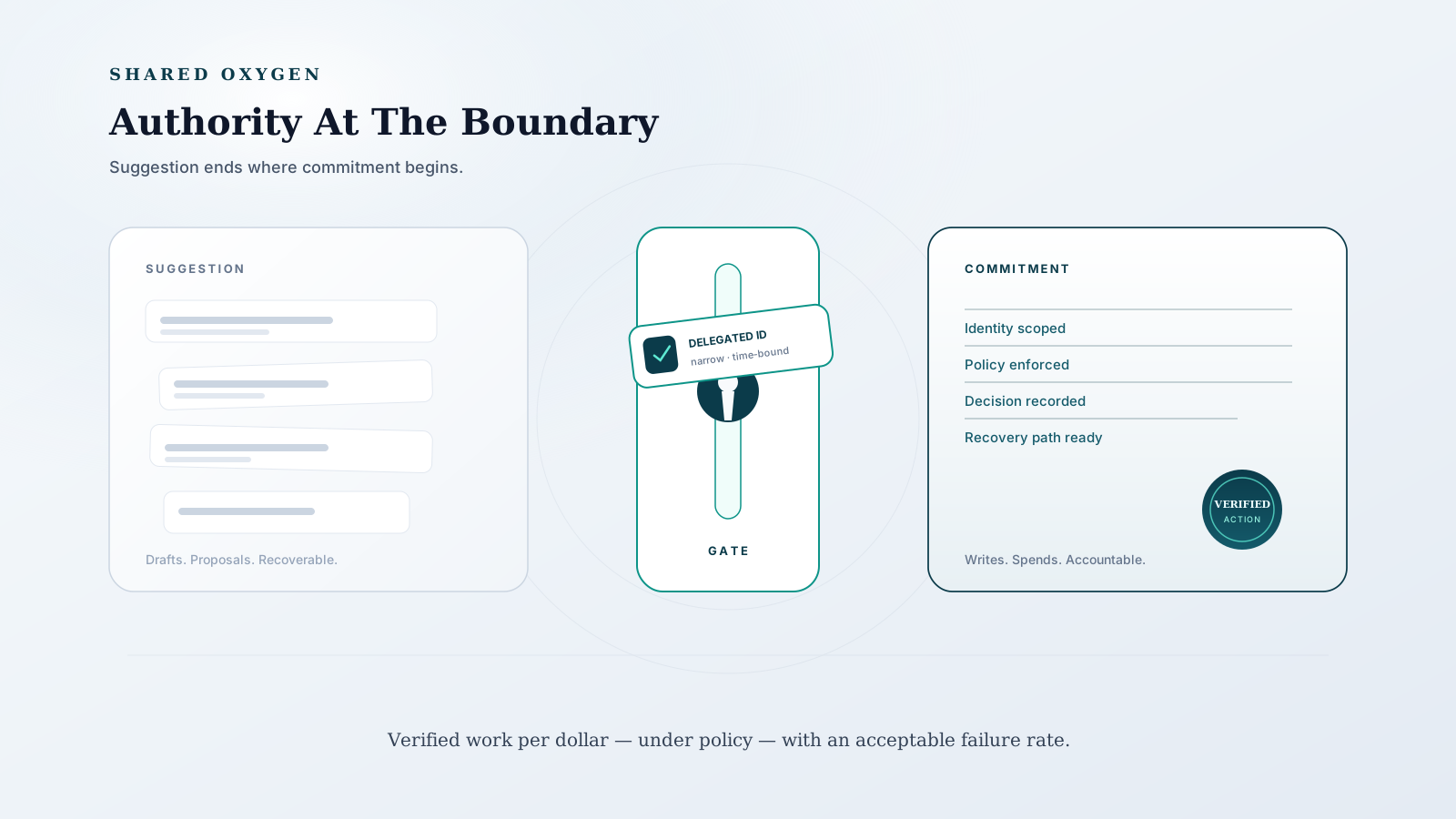
Tool permissions and action limits. Separate read tools from write tools. Default to read and draft. Grant write access per action type with approval tiers — the same logic you would apply to service accounts in traditional automation.
Human review for material decisions. Define materiality: dollar thresholds, client-facing communication, irreversible state changes. Route those actions to explicit approval — not optional override.
Logs that connect source, reasoning, action, and owner. Post-incident review should reconstruct: what was retrieved, what the agent attempted, what changed in external systems, who approved override. Without that chain, you cannot learn or defend the decision.
Design Patterns That Hold Up
Retrieve-then-act with draft gate. Agent retrieves, proposes action, human or rules engine approves before execution. Suitable for high-consequence domains.
Act only on high retrieval confidence. When similarity scores or retrieval validators fall below threshold, escalate instead of acting. Reduces silent wrong-source actions.
Separate research agent from execution agent. One runtime retrieves and summarizes; another executes fixed workflows validated by the first. Adds latency, improves control.
Kill switch and owner. Named operator who can disable agent tools without deploying code — essential for mission-critical paths.
What to Avoid
- Wiring write tools because the demo required "full automation."
- Skipping retrieval regression when legal updates the policy corpus.
- Treating agent logs as engineering debug output rather than audit evidence.
- Assuming human review exists because the slide said "human in the loop" — verify in the runtime path.
Key Takeaways
- RAG plus agents moves failure from wrong answers to wrong actions — govern both layers together.
- Mission-critical paths need retrieval testing, scoped tools, materiality gates, and connected audit trails.
- Many enterprises should stop at governed RAG without agents until retrieval and corpus quality are boringly reliable.
Strategic Recommendations
- Require an integrated risk review for any RAG deployment with write-capable tools.
- Test retrieve-and-act scenarios including wrong-source and stale-corpus cases before production.
- Publish materiality thresholds and approval paths as policy, not as prompt suggestions.
Next Steps
- List agent tools with write access; justify each against materiality policy.
- Run retrieval regression on policy changes before enabling automated actions.
- Rehearse incident reconstruction: can you produce source, action, and owner for a sample transaction?