Measurement Has Always Been the Door
Hollerith did not "disrupt" the census. He made labor countable. Mainframes made production visible plant by plant. Relational systems made cost traceable at the transaction. Each wave looked like technology. It was really visibility — and visibility is what lets capital and authority move.
AI compresses the lag between measurement and action. A well-instrumented operation can surface friction in service queues, margin leakage in a process, or drift in customer behavior while there is still time to intervene. A poorly instrumented one gets a confident recommendation built on conflicting sources. That is worse than no recommendation at all, because it arrives with the aura of precision.
Three Readings Worth Board Time
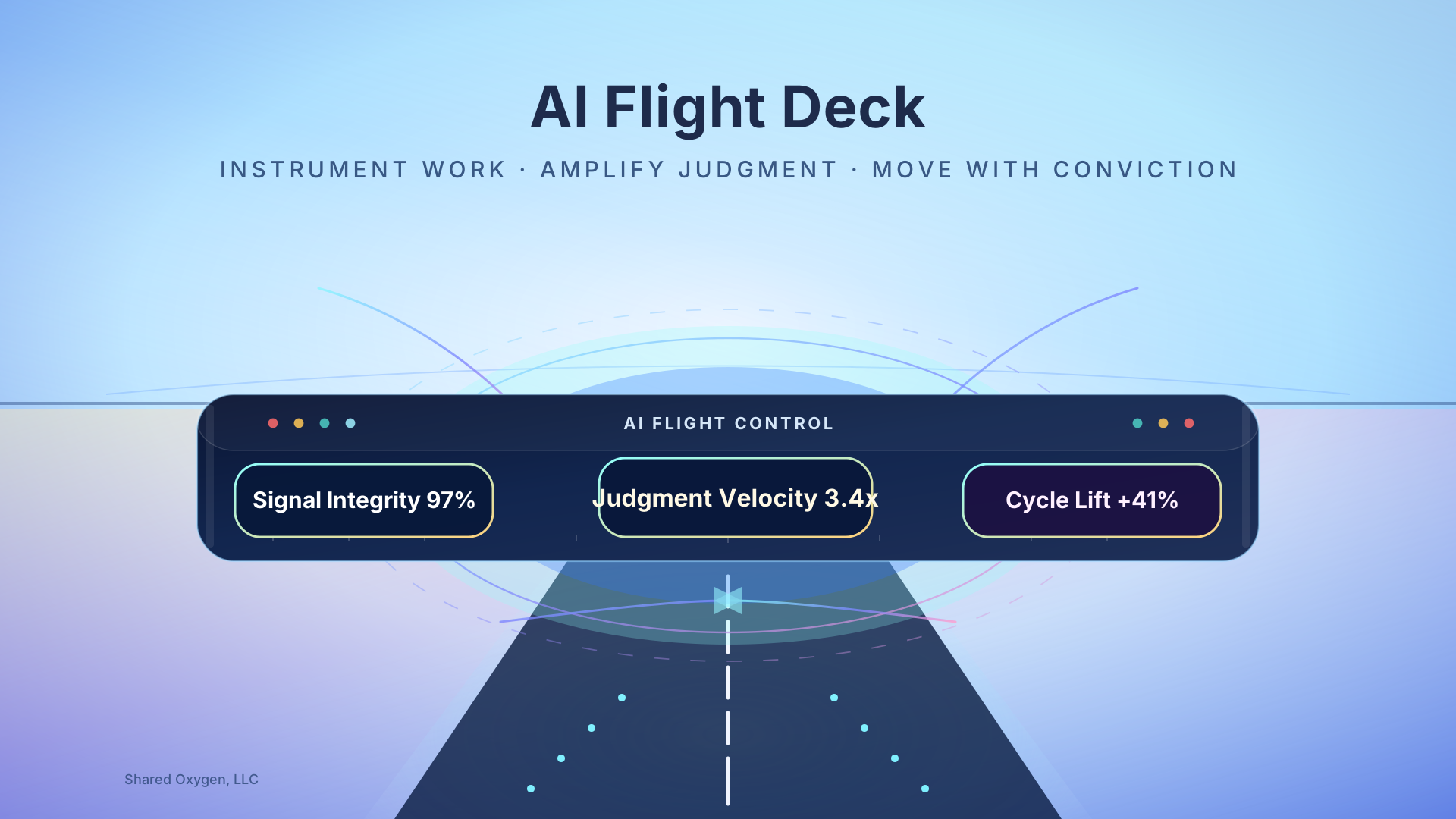
I borrow the flight-deck metaphor deliberately. Pilots do not debate whether the altimeter is "strategic." They check instruments, then act. Executives running AI programs need the same discipline, without the theater.
Signal integrity asks a plain question: is the data trustworthy enough to bet a decision on? Not "are we on a data journey" — which source wins when CRM and ERP disagree, how stale is the feed, who owns the exception when a field is blank. If you cannot answer that for a domain, do not attach a model to it.
Judgment velocity is about institutional reflex, not faster meetings. When AI surfaces a problem — a cluster of complaints, a spike in rework, a vendor payment anomaly — who is allowed to act, on what evidence, without convening a committee? Pre-authorized tiers sound bureaucratic. They are how you avoid learning something on Tuesday and responding the following quarter.
Cycle lift is where programs live or die. Hours recovered, errors avoided, revenue defended, resilience improved — pick a baseline and report against it. Narrative without a number is how AI budgets renew themselves without ever proving value.
Where This Shows Up in the Work
Workforce allocation is the obvious case. Most organizations know, roughly, where manual load sits. Few can prove it at the step level with data stable enough to automate against. AI makes that visible quickly — which exposes both opportunity and embarrassment when the underlying timekeeping or case data is weak.
Customer experience is similar. Sentiment and churn signals are only useful if someone owns the response path. Insight without authority is a report that ages in an inbox.
Process redesign is where executives often oversell AI. Simulation and prioritization help only when the process map reflects reality, not the version from the last reorg deck. Fix the record before you optimize the workflow.
Command, Not Enthusiasm
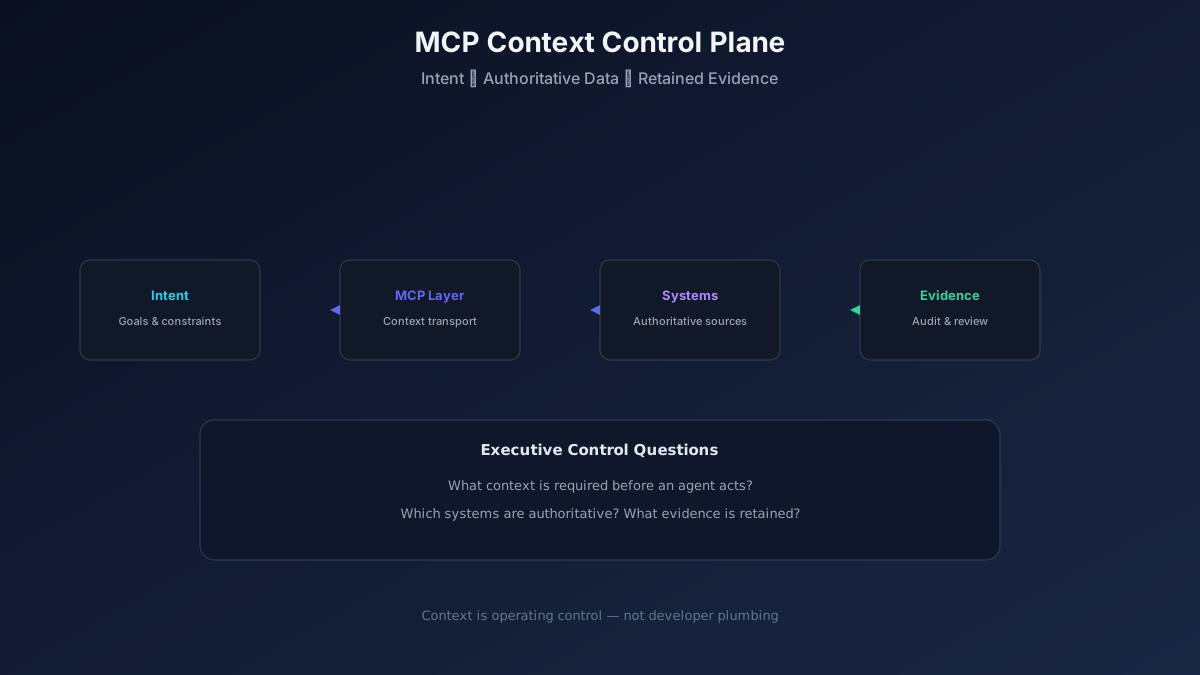
Enthusiasm is cheap. Every vendor demo looks compelling. Command is scarce: named owners, governed reference data, use cases with baselines, and a review rhythm that includes cost, drift, and customer impact — not just "use cases deployed."
Most enterprises stall between experiment and instrument because measurement feels slow. It is slow. It is also the difference between a pilot that teaches you something and one that merely consumes budget.
| Stage | What you actually have | |---|---| | Experiment | Demos, no baseline | | Instrument | Measured pilots, honest failures | | Integrate | AI embedded where work happens | | Command | Autonomy with evidence and owners |
You do not need a maturity workshop to know which row you are in. You need one executive willing to say it out loud.
Key Takeaways
- AI accelerates the old pattern — visibility, measurement, redesign — it does not replace the need for trustworthy data and clear ownership.
- Signal integrity, judgment velocity, and cycle lift are practical readings, not slogans; they predict whether AI becomes pressure or advantage.
- Competitive differentiation sits in command: what the system may read, recommend, execute, and who answers when it misfires.
Strategic Recommendations
- Publish data contracts for every domain AI touches — source, owner, refresh, exception path — before production.
- Run board reviews on readings and outcomes, not vendor roadmaps.
- Fund only initiatives with a baseline and a quarterly evidence line.
Next Steps
- Walk your top three AI pilots: baseline, owner, audit trail — yes or no for each.
- Map the worst signal-integrity conflicts in the domains you plan to automate next.
- At the next executive session, report one cycle-lift metric per funded initiative, even if the number is uncomfortable.